Goiás consolidates its position as a mineral industry hub and a center for debate on the future of mining in Brazil
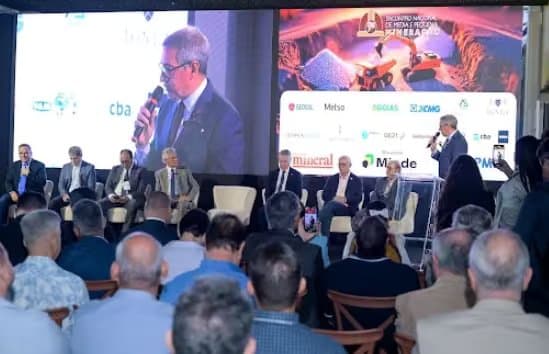
Brasmin 2025 brought together 210 exhibitors, 600 brands and 6,000 visitors over three days of business that may have exceeded BRL 1 billion, reflecting not only the economic strength of the event but also the state's role in coordinating policy, innovation and sustainability in the mineral value chain, while fostering connections and reflection on the future of mining in Brazil.
Video: The opening of Brasmin and the Small and Medium-Sized Mining Meeting brought together authorities and representatives of the country's mineral sector
Goiás stands out as a dynamic center of national mining. The Mining Industry Fair (Brasmin) reflects this moment well. The state is consolidating its position not only as a mineral producer but as a driver of important discussions for the sector. More than an equipment exhibition, the event has become a space for dialogue and public positioning for the sector.
The third edition of Brasmin, held by the Brazilian Mineral Exploration Association (ABPM) and the Mining Industry Union of Goiás and the Federal District (Minde) and organized by Proma Feiras, drew an estimated 6,000 people from June 24 to 26 in Goiânia. According to the organizers, business volume exceeds BRL 1 billion, reflecting not only the economic weight of the event but also its ability to connect the different links of the Brazilian mineral value chain.
Brasmin also hosted the 9th National Meeting of Medium and Small-Scale Mining, a forum that debated important topics for the sector. Together, these segments, made up of about 7,000 companies, account for a significant share of Brazil's mineral production.
However, medium and small-scale mining faces historical challenges: difficulty accessing credit, regulatory obstacles and low visibility in sector public policy. Organized by ABPM, Minde and Revista Brasil Mineral, the meeting brought together engineers, geologists, mining executives and public agency leaders.
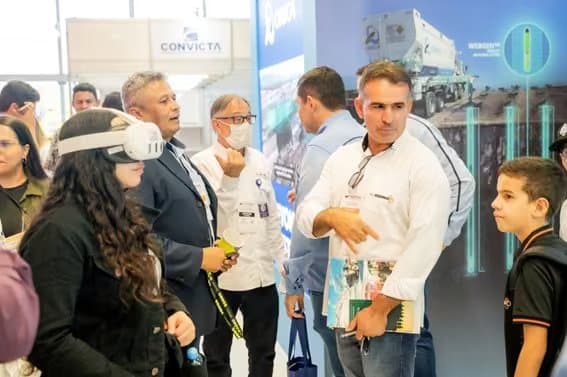
Brasmin showcased new technologies that are revolutionizing the mineral industry
Integration in mining
“It is a pleasant surprise to see Brasmin evolve every year, not only in the number of exhibitors but in the quality of the fair itself, in public participation and, of course, in bringing up mineral policy, society's understanding of mining and the importance mining has for the country,” says João Luiz Nogueira de Carvalho, president of Geosol and of the Geopar Group, a conglomerate of companies offering drilling, laboratory and mineral engineering solutions.
For José Roberto Sevieri, CEO of Proma Feiras, the event fulfilled its purpose: to open space for debate and exchange on the future of the sector. “Brasmin 2025 had a very clear mission: to open discussions on content and technology in mining. In my opinion, it achieved this with flying colors, because it brought not only more people but a higher-quality audience and around 50 talks in three different auditoriums. All of this makes the mining of tomorrow better than the mining of today.”
Sevieri explains that Brasmin's purpose is to serve as a link between technology, business and mineral policy. He recalled that, although Goiás ranks third among the country's largest mineral producers, there was still a gap in the integration of the sector.
“Brasmin comes to fill that gap,” he says. The organizer also highlights the presence of visitors from several states at this edition. He also stresses the need for institutional and regulatory progress in mining. “Taking six or seven years to obtain a mining permit is far too long. Brazil needs to be faster,” he warns.
Among the highlights of this edition was the second Interstate Meeting of Mining Leaders, led by Lívia Parreira, coordinator of the State Mineral Resources Plan (PERM-GO). The meeting brought together representatives from six states — Bahia, Goiás, Mato Grosso, Pará, Rio de Janeiro and Rio Grande do Sul — continuing a dialogue begun in 2023 at the previous edition.
“The state of Goiás is at an advanced stage of mineral planning, supported by broad coordination between public and private stakeholders. This is decisive for consolidating an ecosystem that attracts investment and supports the sustainable growth of mining,” says Lívia, who also previewed the proposal to create a future National Forum of State Secretaries for the sector.
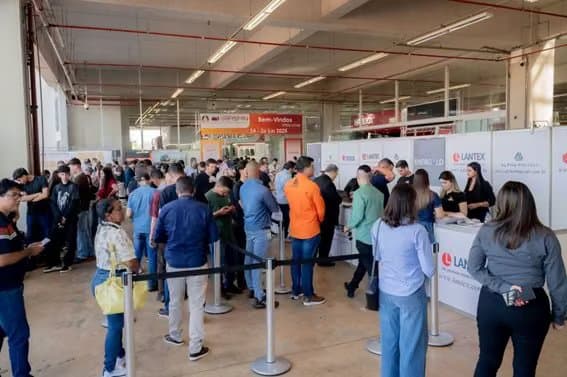
About 6,000 people visited the fair during the three days of the event in Goiânia
Goiás on the national mining map
More than just the host of Brasmin, Goiás has been gaining ground as a national leader in the transformation of mining. This perception is expressed in the remarks of authorities such as Governor Ronaldo Caiado, who highlighted the state's industrial growth and its ability to add value to mineral production.
“Today we have become a state that has seen unparalleled growth in industrialization. Goiás is no longer just a commodity-exporting state. It is a state that is able to add value,” he says.
For the governor, it is necessary to recognize that minerals are an inseparable part of the energy transition and that there is a global inconsistency in demanding decarbonization without valuing the material base that supports it.
This pragmatic view of the sector is also reflected in the assessment of the Federation of Industries of the State of Goiás (FIEG). Its president, André Rocha, emphasizes the importance of the sector, especially for the interior of the state.
“Mining takes development to the interior. We see the growth of municipalities such as Alto Horizonte, Catalão, Niquelândia and Barro Alto,” he says. Rocha also positions Goiás as a leader in the production of strategic minerals such as nickel, copper, phosphate, niobium and rare earths.
The president of the Mining Industry Union of Goiás and the Federal District (Minde), Luiz Vessani, reinforces the value of the fair as a space for promoting technological modernization. “These companies are bringing new technologies, new equipment and business opportunities, which mainly strengthens the mining sector,” he says. He also praised the state government's efforts to improve environmental licensing.
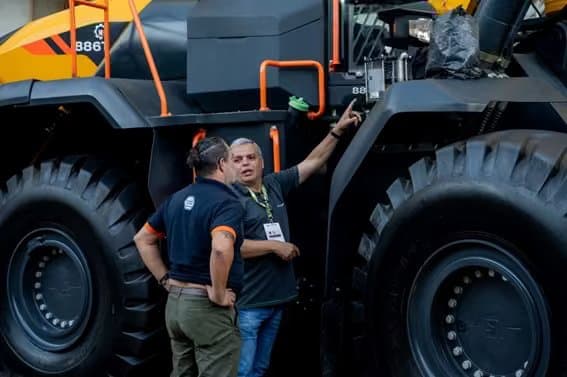
210 exhibitors and more than BRL 1 billion in business volume
The image of mining
The public image of mining was one of the topics of the event, which included a panel dedicated to the subject. For Sandra Maia de Oliveira, of the National Association of Construction Aggregate Producers, the sector still struggles to communicate its social value.
Juliana Carnevalli, communications coordinator at Minde, presented data from a survey of 343 journalists that seeks to understand how the sector is portrayed and what its main image and reputation challenges are. The survey shows that 77% of the press professionals interviewed see mining as a negative activity; 58% see it as being in conflict with the environment; 50% see the sector as reactive; and 70% said they would be interested in following the sector if it were more accessible.
“The survey offers a detailed diagnosis of how the press views mining in Brazil. It points to critical areas, such as transparency, and provides valuable insights so that the sector can build a more open, clear and accessible relationship with journalists, aiming for greater and fairer social recognition of our activity,” says Luis Maurício Azevedo, president of ABPM.
This concern with mining's public narrative is accompanied by reflections on bureaucratic obstacles. Lawyer and mining law specialist Rodrigo Silveira Costa notes that slow licensing processes still hinder the growth of many projects.
“We have the discussion about the bureaucracy of environmental licensing and what is needed to speed up project approvals and professionalize the sector,” explains Costa. For him, the presence of specialists from different fields at Brasmin creates an environment conducive to exchanging experiences and building joint solutions.
Business and networking
Far beyond business, events like Brasmin serve as meeting points and places to build relationship networks. For Rodrigo Martins, general manager of Foraco Drilling Services, being at the event is strategic. “It is very important for us to be here, connecting people and meeting our clients. We will prepare for the next event, which will be in 2027,” he says.
The logic of connection also appears in the testimony of engineer Ronaldo Zamboni, of Icon, a company that supplies industrial equipment, machinery and systems and had its own booth at Brasmin. “We made many contacts and did a lot of networking, seeing friends and former clients again and developing new partners,” he says.
Along the same lines, Claudia Bolzan, CEO of Lantex, which supplies screens for ore and aggregate processing, believes Brasmin is an opportunity to get closer to the regional market. “Meeting clients from Goiás here and trying to understand what they need to improve the quality of their products. That is what we are trying to do, and I hope we have succeeded,” she says.
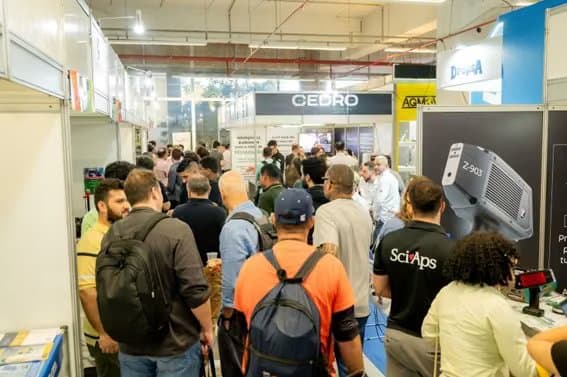
The event has established itself as a space for business and debate on the future of the sector
According to Mauricio Gaioti, CEO of Alpha Minerals, the fair represents a concrete opportunity for business expansion, high-quality networking and learning. “Our expectation goes beyond closing partnerships. We came to listen, debate and evolve. Brasmin offers a 360° view of the challenges and opportunities in our sector,” says Gaioti, who gave a talk presenting the solutions and advantages small miners can find in the Alpha ecosystem, which offers secure access to the international market at better prices.
For Leonardo Prudente, executive director of Axía Resources, Brasmin stands out for bringing together suppliers with cutting-edge technologies in a single space. “We leave here with very rich information, and we return to the field with all the legacy that Brasmin leaves us,” he says.
Brasmin 2025 reaffirmed its leading role among the sector's major trade fairs. More than business, the event has established itself as a space where the future of a more connected, technological and socially responsible mining sector is being shaped.
“The fair's revenue generates income, jobs and development,” sums up José Sevieri. But beyond the numbers, what remains is the certainty that the mineral sector in Goiás finds not only rich soil but also fertile ground to think, evolve and project itself nationally.
Related news
 News
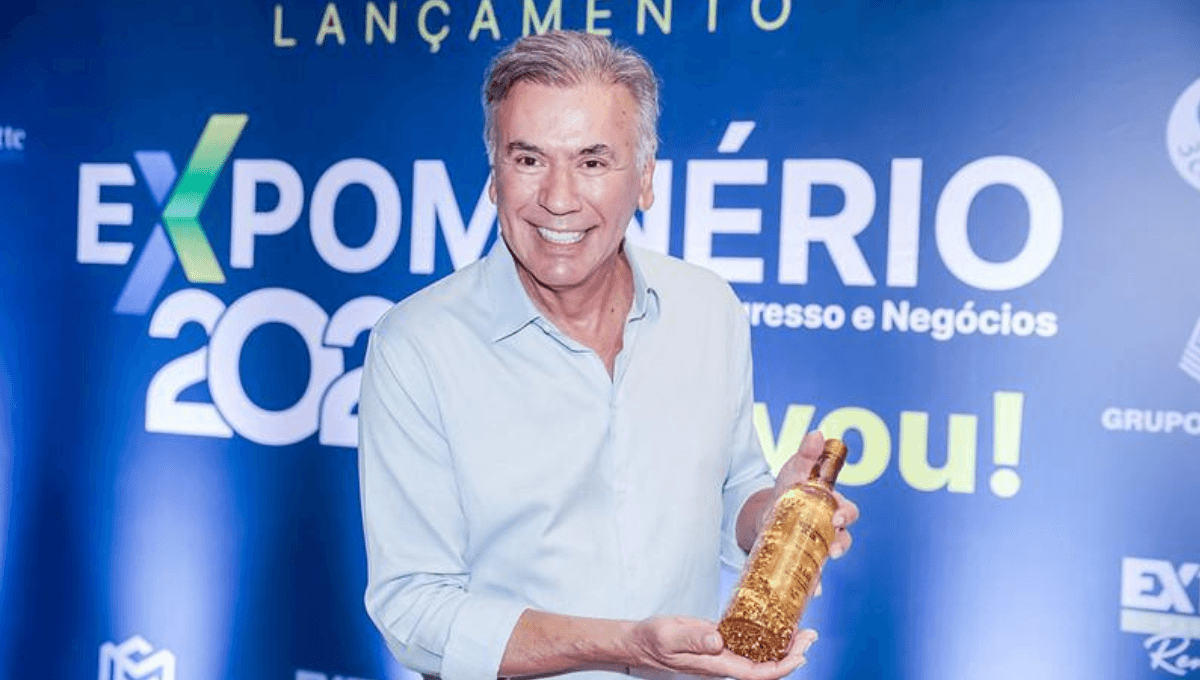
Axía Resources takes part in the Expominério 2026 launch and strengthens strategic connections for its gold project in Goiás
The company was among the guests at the event, which brought together more than 300 representatives of the mineral sector in Mato Grosso. Its participation reinforces the strategy of building ties with suppliers and partners for the future gold operation in Niquelândia (Goiás).
 News
Bom Jardim Project: AXÍA Resources presents progress in copper exploration in Goiás
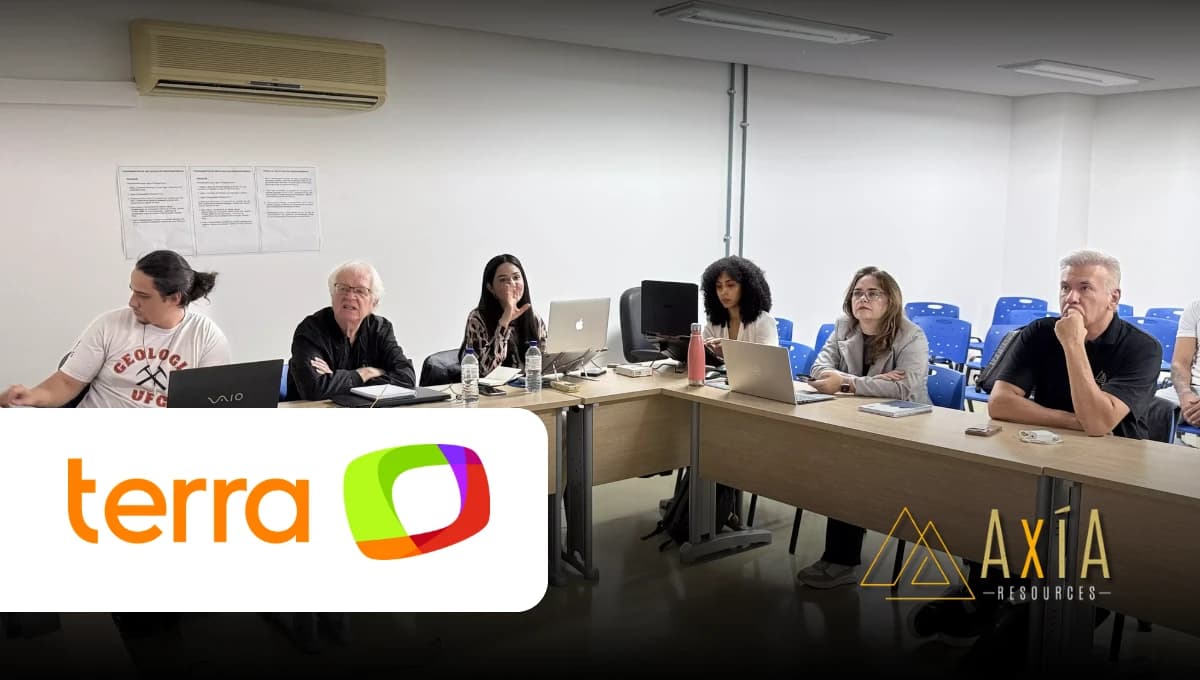
. AXÍA Resources presented the latest results of the research carried out at the Bom Jardim Project, a copper deposit located in the municipality of Bom Jardim de Goiás (Goiás), during a workshop held at the Institute of Geosciences of the University of Brasília (UnB). The meeting brought together researchers from the University of Brasília, the […]
 News
Axía Resources brings experts together at the University of Brasília to present technical progress on the BJG 2026 Project through a workshop
. On June 22, AXÍA Resources took part in a technical meeting at the University of Brasília (UnB) to present progress on the Bom Jardim Project. The initiative is the result of the partnership between AXÍA and the university, focused on developing innovative solutions for mineral research […]